

- About TCB
- Sewing Machines for TCB
- TCB Crews Introduction
- News / Daily
- Shop / Stockists
- Repair & Hem
- Recruit
- Contact


2026/04/08
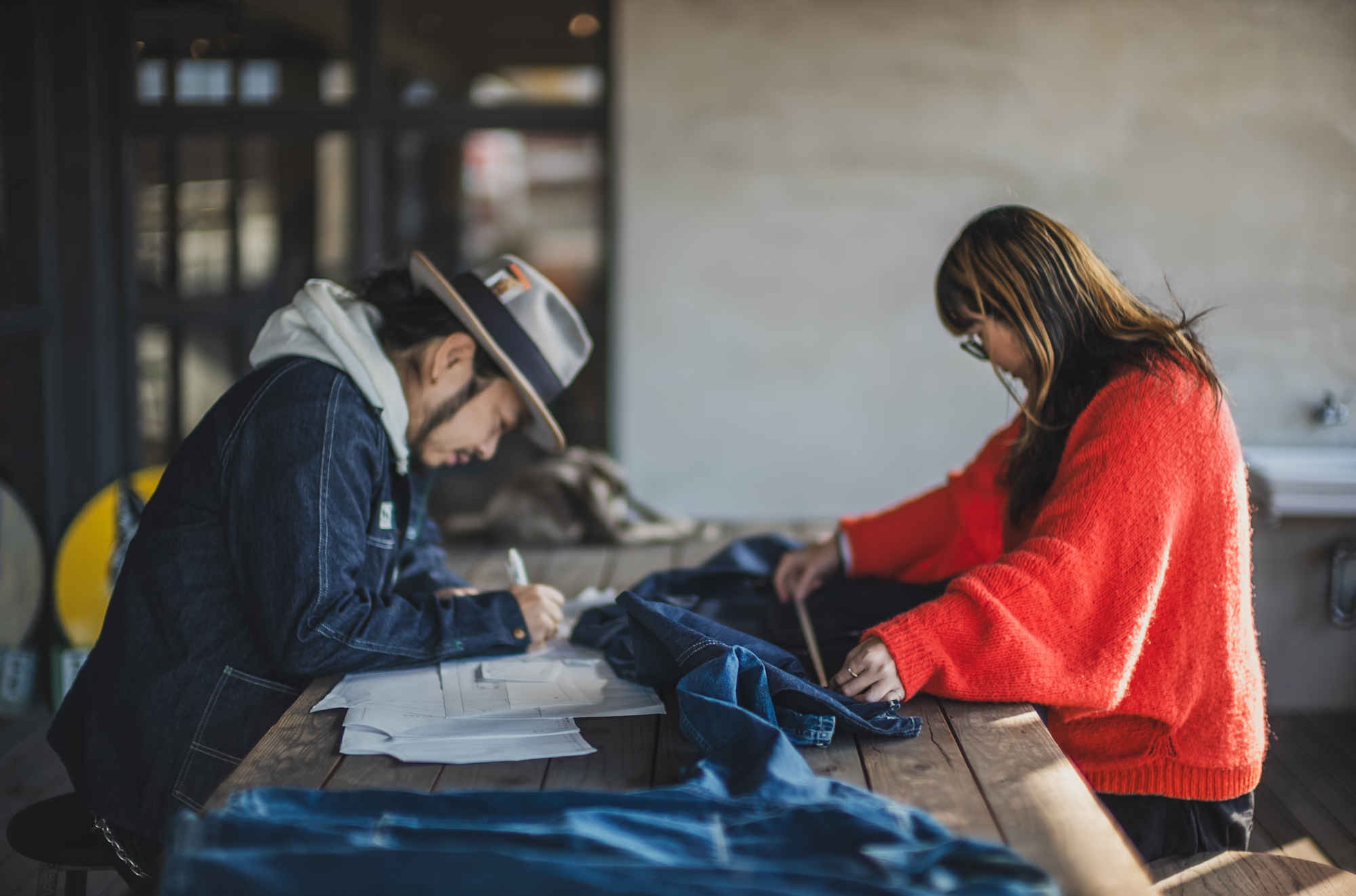
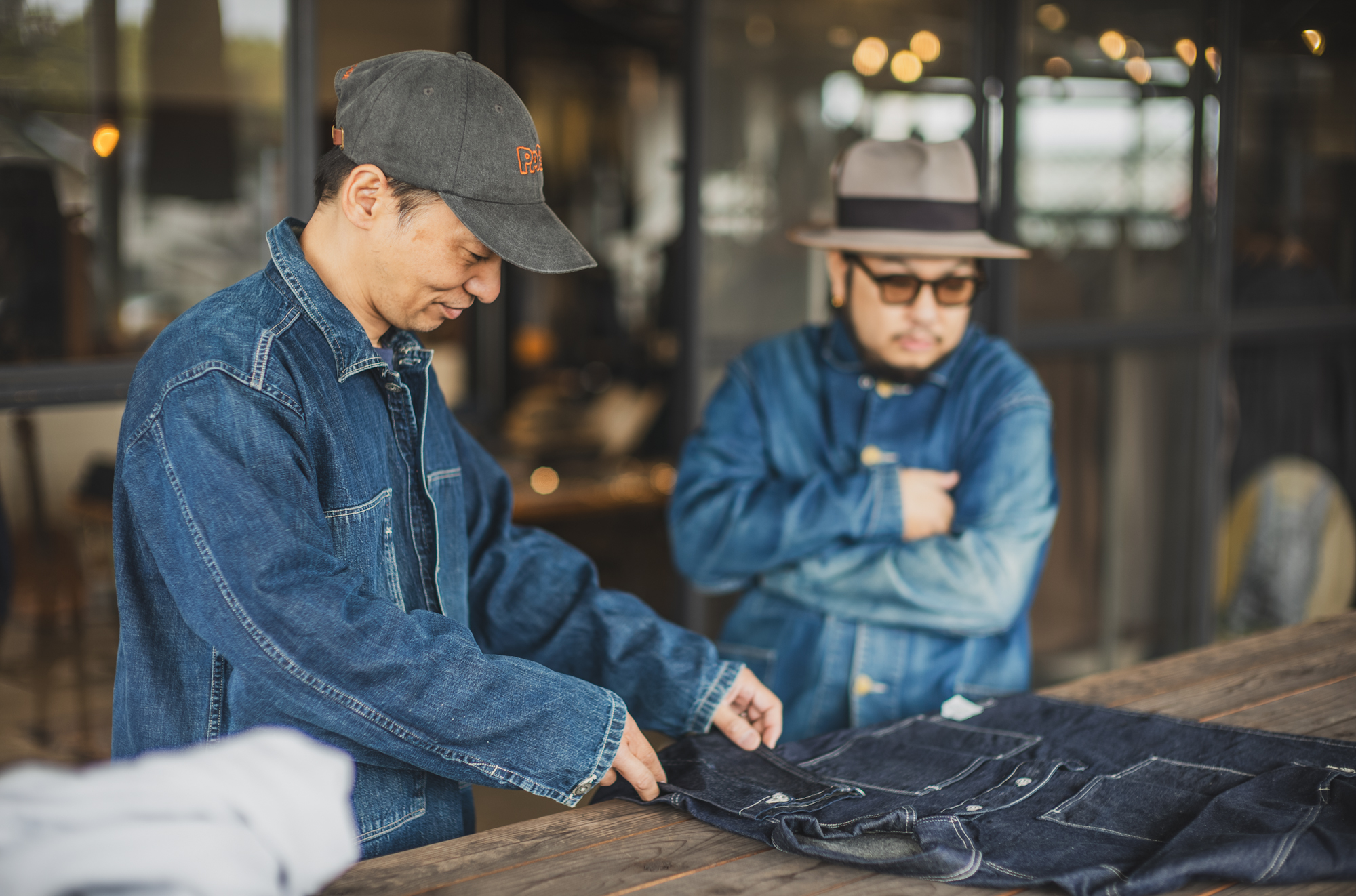
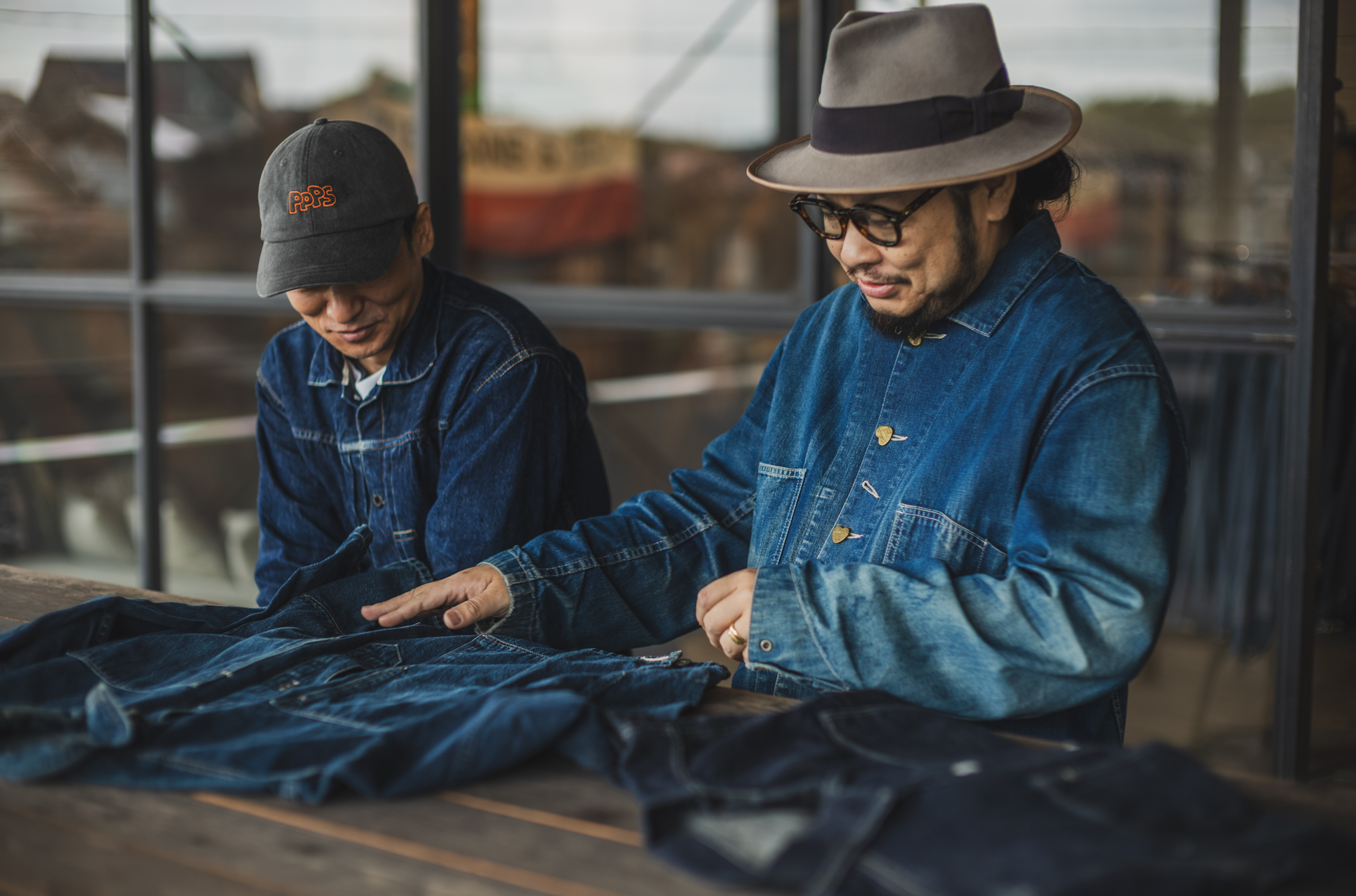
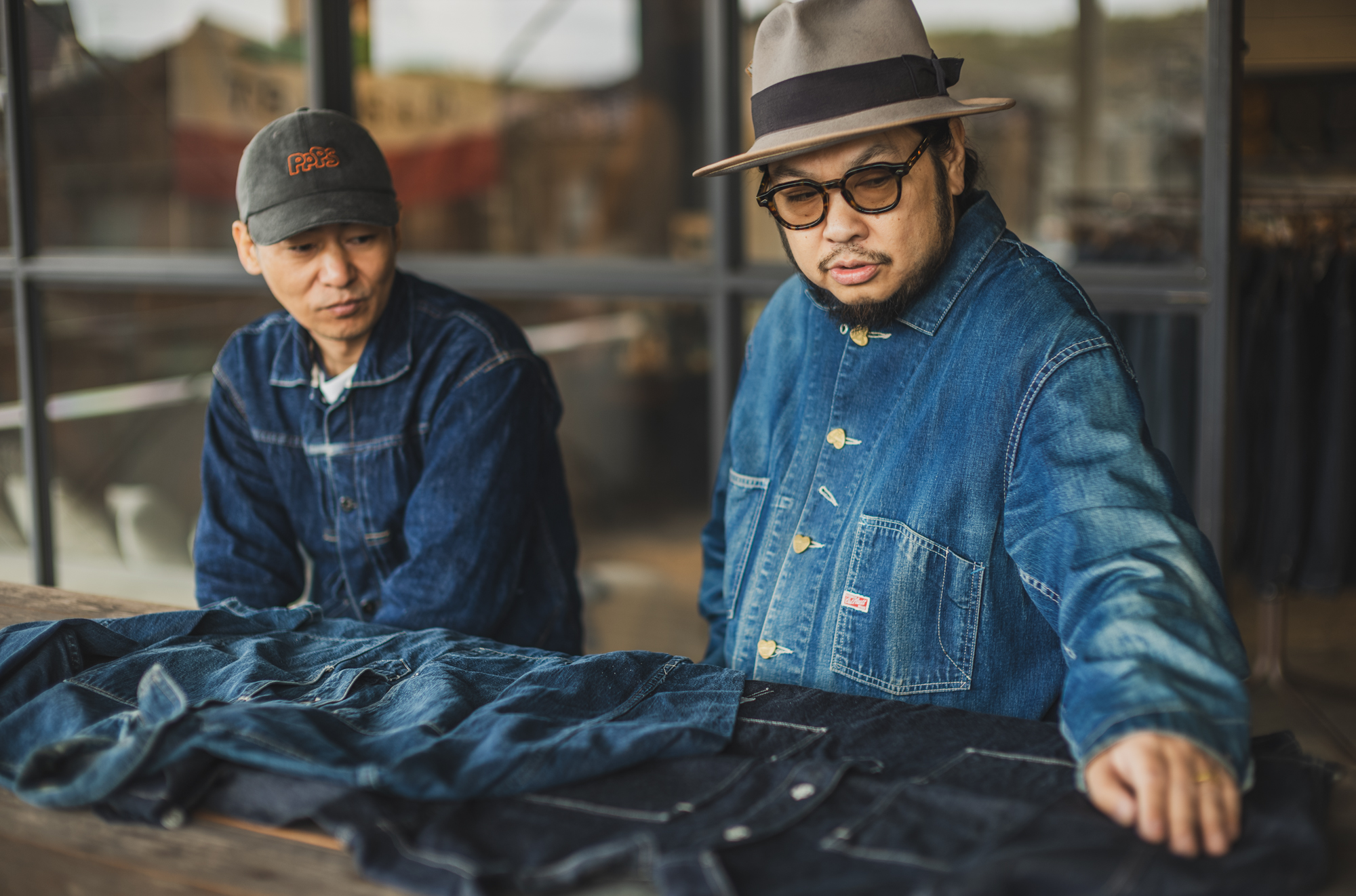
いつも何かを始める時、 まずは専務と古着を観ながら雑談をするところから始まります。
1Fではどのミシンを使うのか。 どんな設定で縫うのか。
ラッパと呼ばれるアタッチメントはTCBにあるのか。 なければ作るのか。
それともWorkersに忍び込んで借りパクするのか。
そんな話をしながら、 頭の中で大まかな登場人物をブッキングしていくイメージです。
そして、生産に関わる人たちを紹介するにあたって、 毎回共通しているのは、 自分がそのセクションごとに甘えまくっていること。
甘えまくることで、 その人の良さを最大限引き出す。
…という言い訳もありますが(笑)
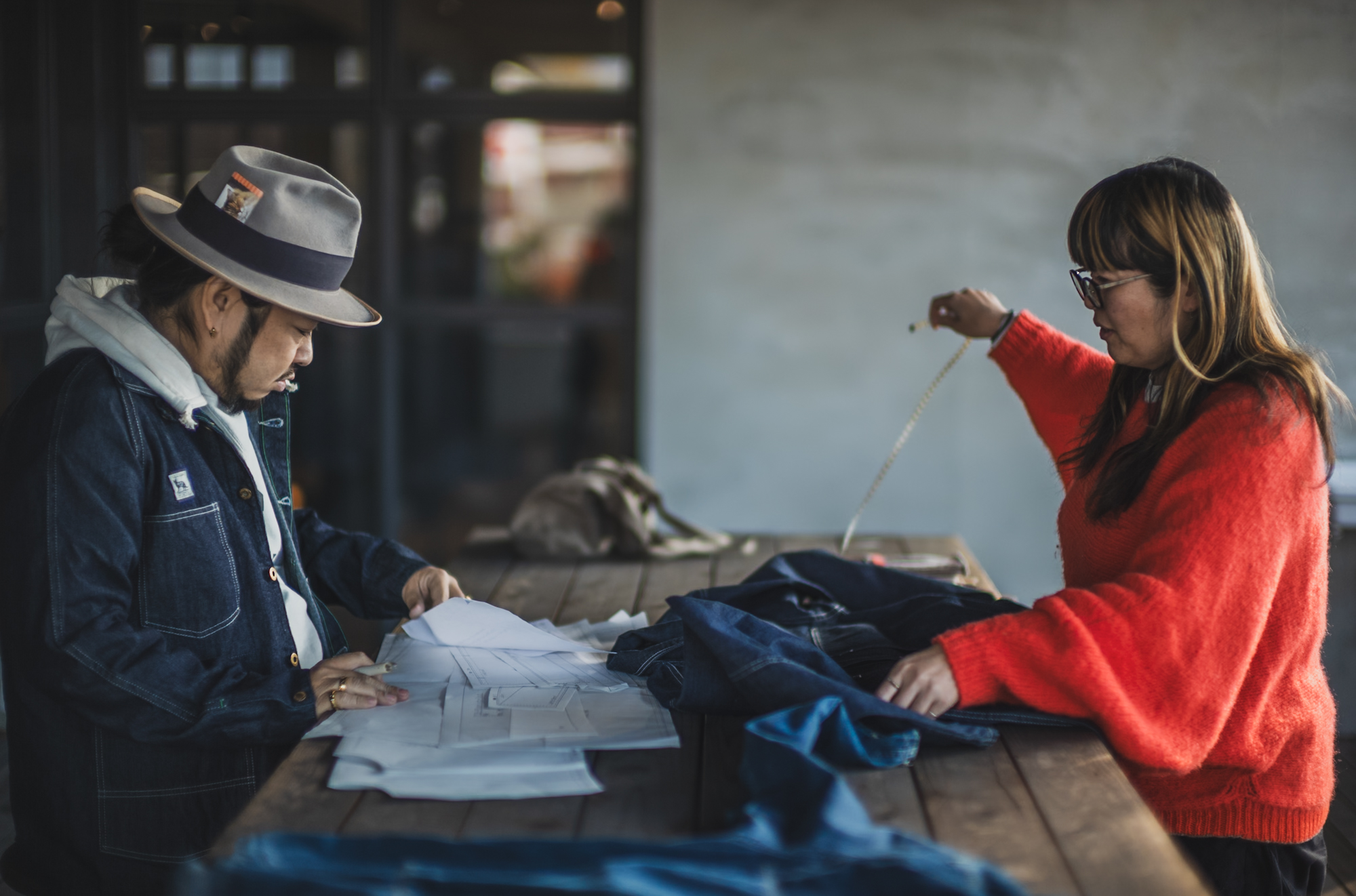
もちろん生地も同時進行で仕込むんですが、 一番大事なのはパターンです。
TCBでは、ブランドが始まる前から 20数年付き合いのある、同い年のお姐さんと一緒に作ります。
古着の“変な形”が好きなのか。
それとも“変な形を修正したい”のか。
そんな話をしながらディスカッションして、 同い年という理由で、なぜか書記係はいつも自分です。
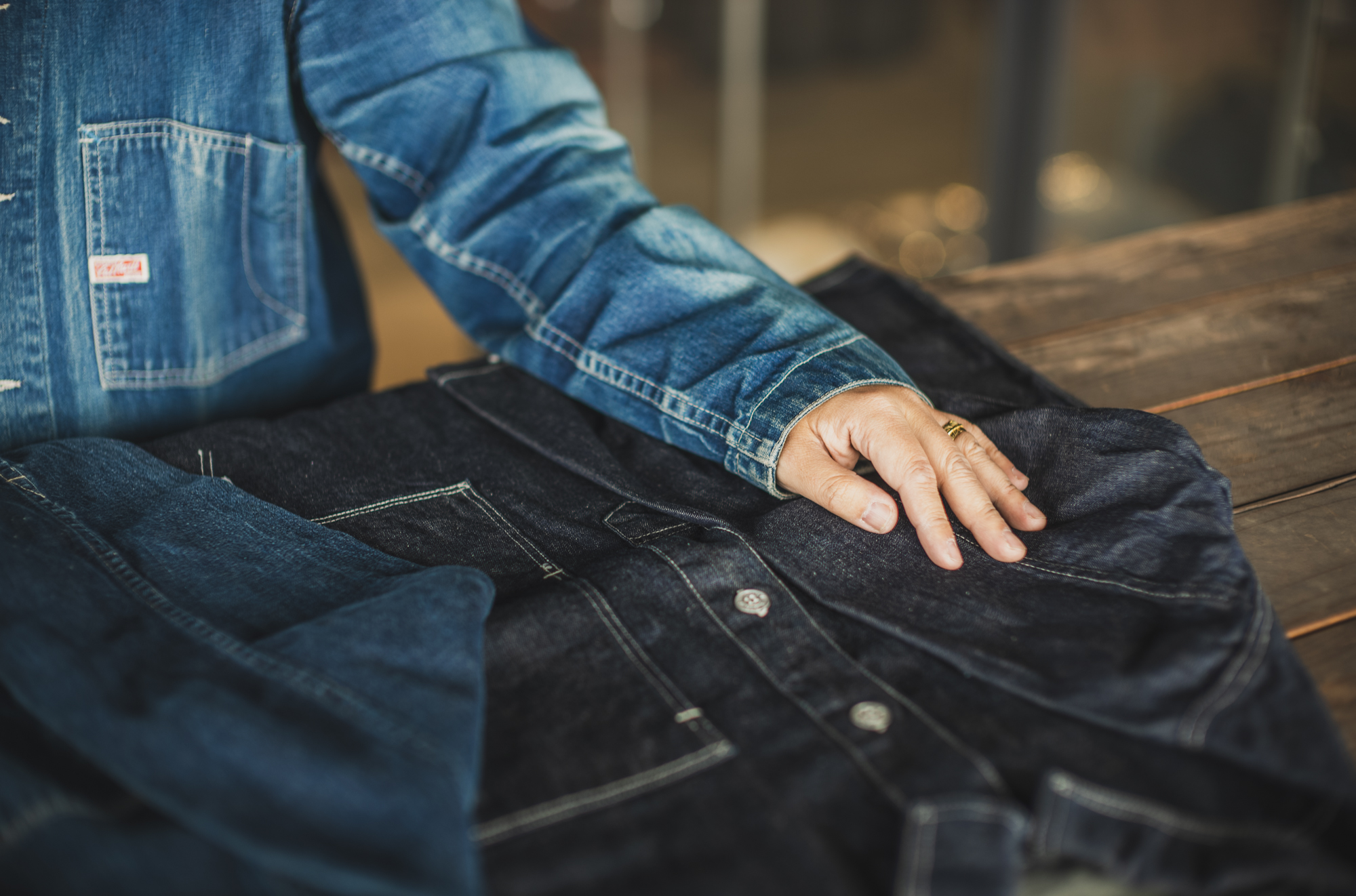
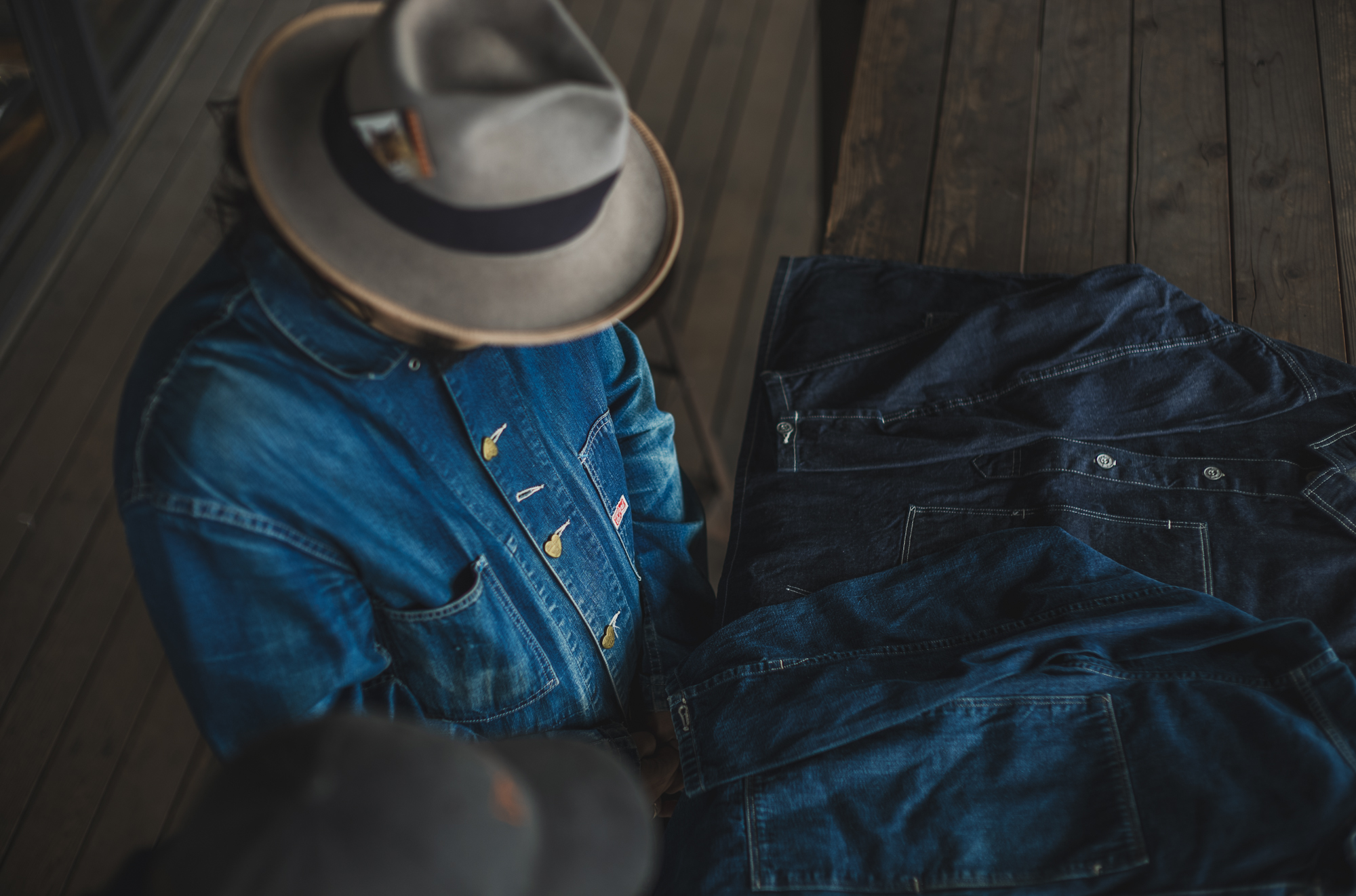
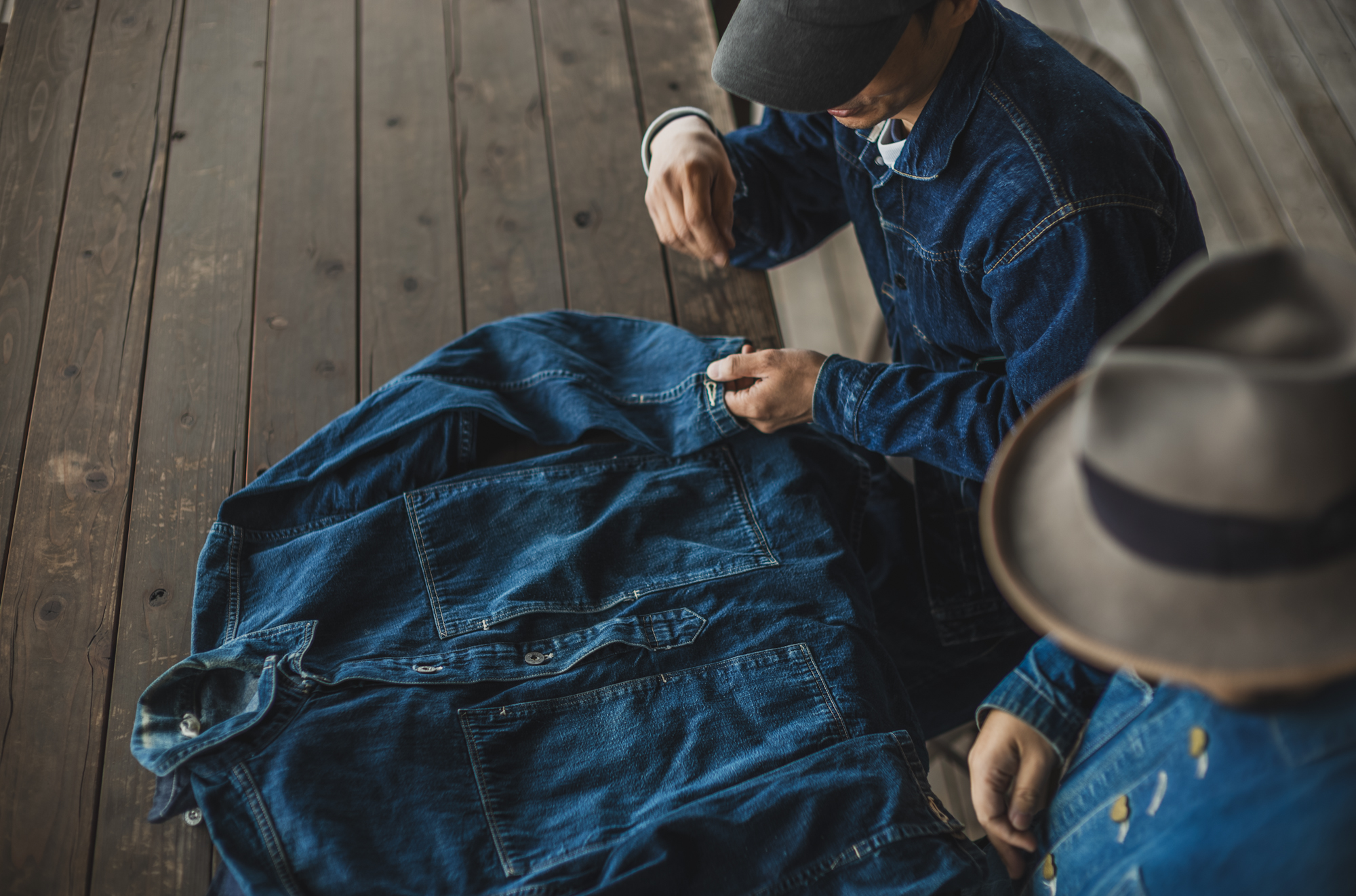
少し縫製工場っぽい話をすると… 民間のジーンズが2本針ミシンを多用する時代に生まれた、 1935年頃のジャケット。
ご多聞に漏れず、襟とポケットには2本針ミシンが使われています。
ただ面白いのは、 同じ2本針でも“針幅が違う”こと。
ポケットは3/16インチ幅、 襟は1/4インチ幅。
マニファクチャーによって仕様は様々ですが、 これって「美しさ」を狙ったというより、 軍への納品が決まり、仕様が決まり、 2本針の工程が2箇所ある。
工場にはミシンが2台ある。 幅は違うけど、その2台で回そう。
そんな現場的な判断だったんじゃないかと想像してるとワクワクが止まりません。
そしてそのワクワクが大きければ大きいほど良い物が生まれる合図なのです
Whenever we start something new,
it always begins with a casual conversation—looking at vintage pieces together with our director.
Which sewing machines should we use on the first floor?
What settings should we run them with?
Do we already have the attachments, like the ones we call “rappa”?
If not, should we make them?
Or sneak into Workers and “borrow” them without asking?
While having these kinds of conversations,
we slowly start to book the “cast” in our heads.
And when it comes to introducing the people involved in production,
there’s one thing that’s always the same—
I rely on each of them as much as I possibly can.
By leaning on them,
I believe it brings out the best in what they do.
…or at least, that’s my excuse. (laughs)
Of course, we prepare the fabric in parallel,
but the most important part is the pattern.
At TCB, we work with a pattern maker who has been with us for over 20 years—
even before TCB officially started.
She’s the same age as me.
We constantly discuss:
Do we love the “odd shapes” found in vintage?
Or do we want to correct them?
And for some reason, probably because we’re the same age,
I always end up being the one taking notes.
To get a bit more into the sewing factory side of things…
This jacket dates back to around 1935,
a time when civilian jeans had already begun using double-needle machines extensively.
As expected, both the collar and the pockets are sewn with double-needle stitching.
But what makes it interesting is that
the needle gauge is not the same.
The pockets are sewn with a 3/16-inch gauge,
while the collar is done with a 1/4-inch gauge.
Specifications vary depending on the manufacturer, but
rather than being a purely aesthetic choice,
it was probably something much more practical.
The military places an order.
Specifications are decided.
There are two areas requiring double-needle stitching.
The factory has two machines.
Even if the gauges are different,
they simply decide to run production with those two machines.
Imagining these kinds of decisions made on the factory floor—
that’s the part I find endlessly fascinating.
And when that sense of excitement grows stronger,
it’s usually a sign that something good is about to be made.






 Categolies
 Tag
Tag Archive