

- About TCB
- Sewing Machines for TCB
- TCB Crews Introduction
- News / Daily
- Shop / Stockists
- Repair & Hem
- Recruit
- Contact


2026/04/11
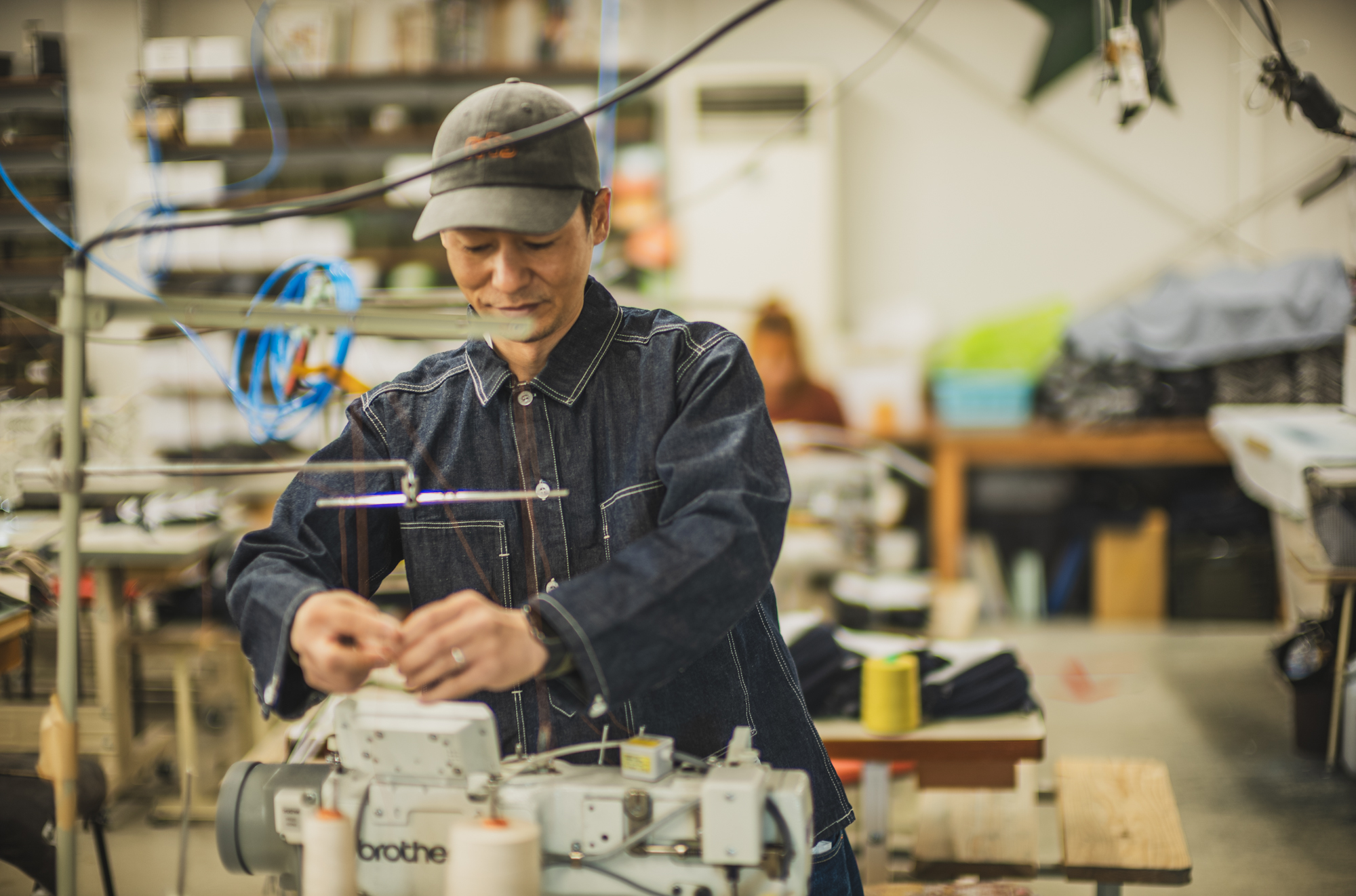
Vintageを参考にしながら、工場長と相談して決めていくのがミシンのラインナップ。
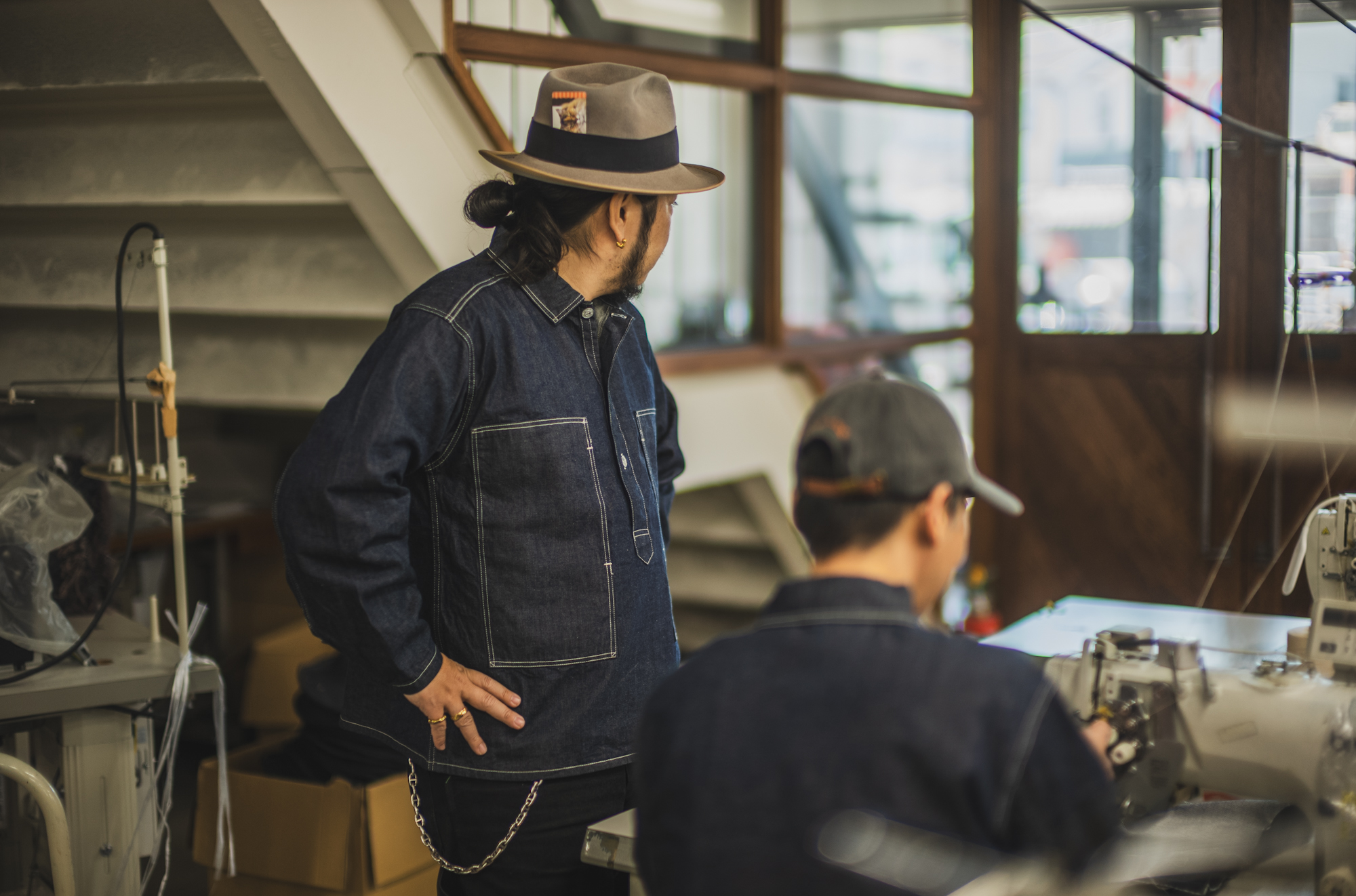
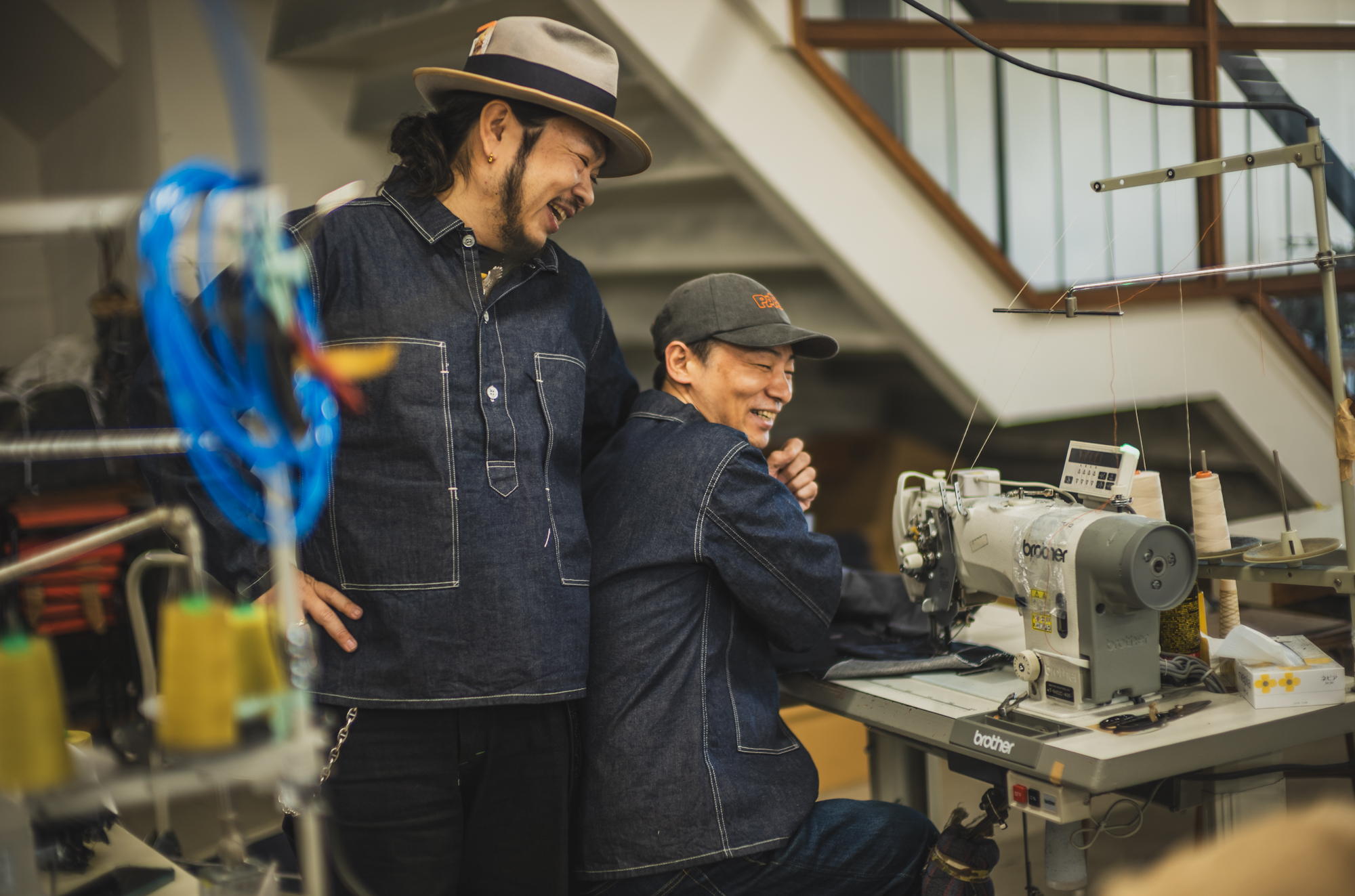
二人三脚ならぬ二人羽織スタイルでこれからも良い物を一緒に作ろうと思って後ろから援護射撃を試みたんだけど邪魔だったみたい
さて
今回のCATFACEで使用したミシンを整理していくと、 “支給品ならではの面白さ”に気づきました。
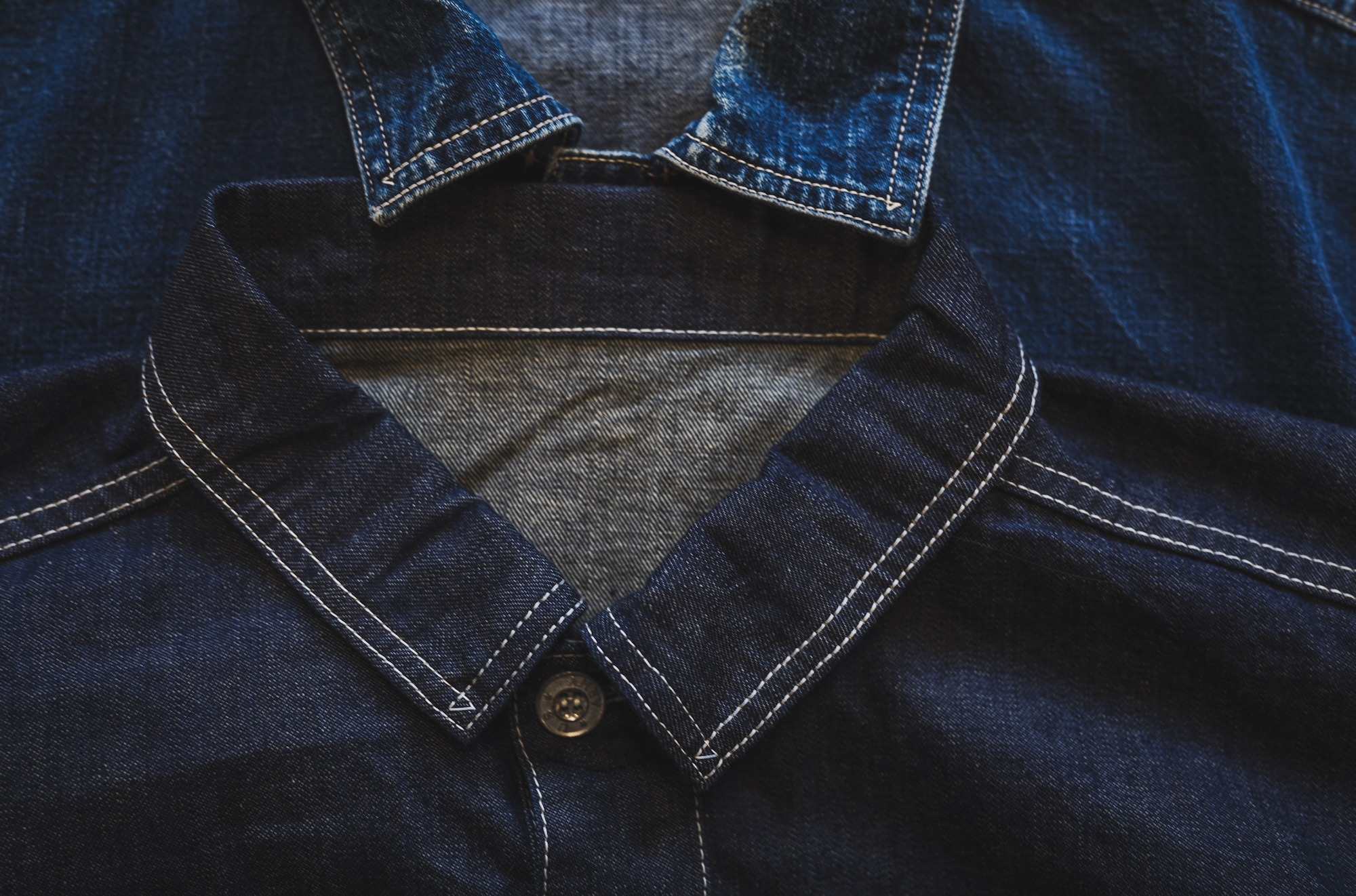
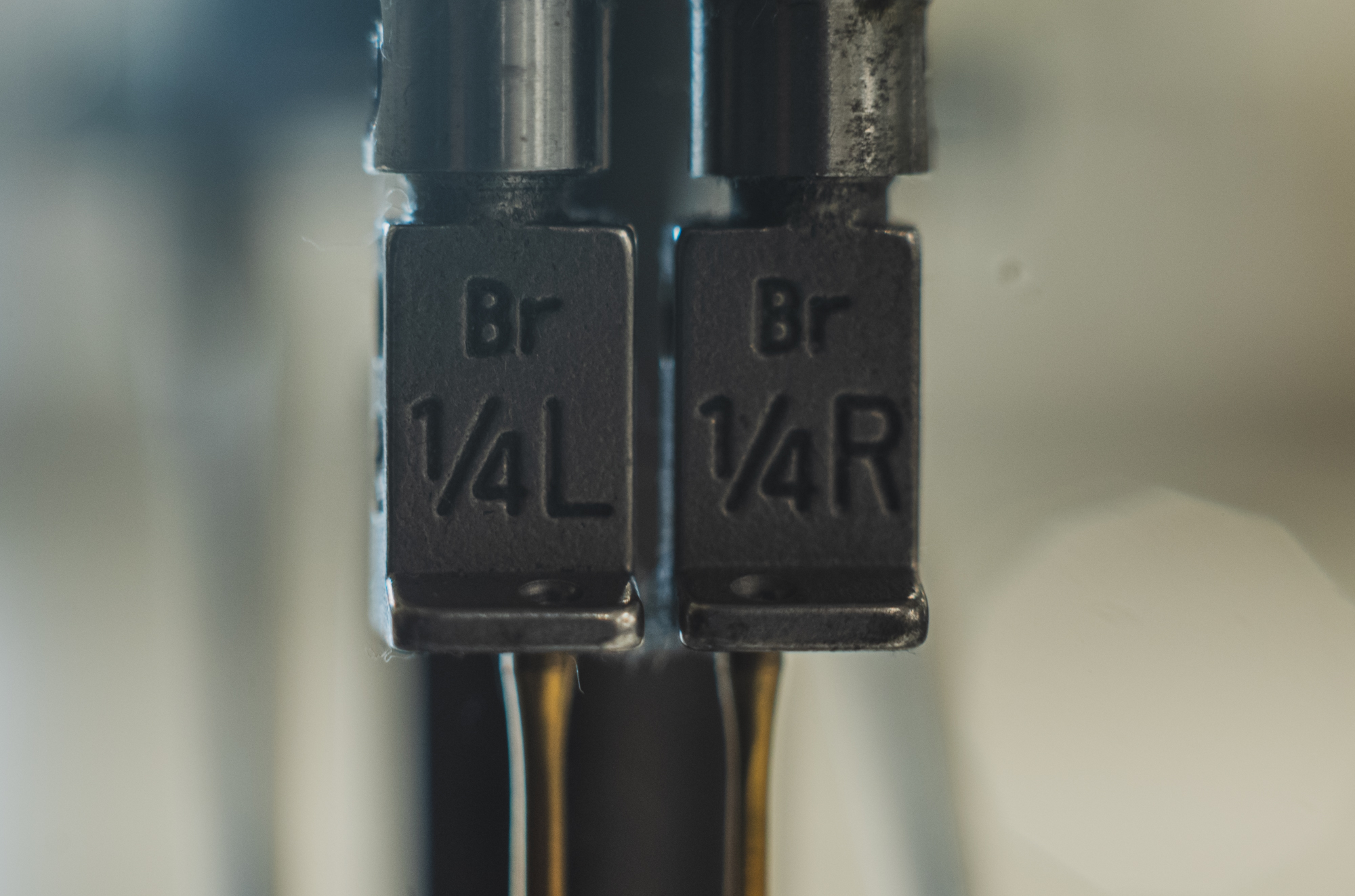
襟のダブルステッチには、 1/4インチ(約6mm幅)のミシンを採用。
一方で、同じくダブルステッチの胸ポケットの長方形部分には、 3/16インチ(約5mm幅)のミシンを使っています。
この使い分け、 現代、特に日本の工場では基本的にやらない設定です。
5mmなら全部5mm、 6mmなら全部6mm。
ダブルステッチの幅は“絶対に統一する”のが前提。
でも、今回参考にしたヴィンテージは違った。
これはあくまで想像ですが… 軍への納品が決まり、仕様が決まり、 2本針の工程が2箇所ある。
工場にはミシンが2台ある。
幅は違うけど、その2台で回そう。
そんな現場的な判断だったんじゃないかと思っています。
もちろん“2台”というのは仮の話で、 実際にはもっと大きなスケールでの判断だったはずですが(笑)
ミリタリーの面白さって、 やっぱり“ミルスペックに対する民間工場の解釈”だと思っています。
そのマニファクチャーが持っている設備で、 いかに仕様をクリアするか。
その工夫や割り切りが、 結果的に製品の個性として現れてくる。
本来これは、販売するための服ではなく、 “支給するための服”。
戦うための服を、どう作るか。 その合理性と現場判断の積み重ねが、 今見ると一番面白いディテールになっているのかもしれません。
When deciding the lineup of machines,
we always start by looking at vintage pieces together with our factory manager.
We work side by side—well, more like a two-person three-legged race…
or maybe more like a two-person piggyback style.
I tried to support him from behind, thinking we’d keep making great things together like this,
but apparently I was just getting in the way.
Anyway—
When we break down the machines used for this CATFACE piece,
we noticed something interesting—something very unique to military-issued garments.
For the collar’s double stitching,
we used a 1/4-inch (approx. 6mm) gauge machine.
Meanwhile, for the rectangular chest pocket—also double-stitched—
we used a 3/16-inch (approx. 5mm) gauge machine.
This kind of setup is something you almost never see
in modern factories, especially in Japan.
If it’s 5mm, everything is 5mm.
If it’s 6mm, everything is 6mm.
The width of double stitching is usually something that must be perfectly consistent.
But the vintage piece we referenced wasn’t like that.
This is just my imagination, but…
The military places an order.
Specifications are set.
There are two areas requiring double-needle stitching.
The factory has two machines.
The gauges are different—but they just run production with those two machines.
Of course, “two machines” is just a simplified way to explain it.
In reality, the scale must have been much larger. (laughs)
What makes military garments so fascinating is
how civilian factories interpret military specifications.
How do they meet the requirements
with the equipment they actually have?
That balance between constraint and improvisation
is what ultimately creates the character of the garment.
These weren’t originally made to be sold.
They were made to be issued.
Clothing made for function.
Clothing made for work.
Clothing made for war.
And somehow,
those layers of practicality and on-the-ground decision-making
have become the most interesting details when we look back at them today.










 Categolies
 Tag
Tag Archive