

- About TCB
- Sewing Machines for TCB
- TCB Crews Introduction
- News / Daily
- Shop / Stockists
- Repair & Hem
- Recruit
- Contact


2025/08/17
90年代に「ジーンズは洗ったらダメだ!」という刷り込みを受けた私は、いまだに洗いを我慢して穿いてしまうのは内緒の話です。
もちろん洗わずに生まれる迫力のあるヒゲや強いコントラストは魅力的ですが、それを見て
「お!Vintageだね」
というより
『格好良く日本人が育てたジーンズ!』
となります。
むしろ、ある程度洗いながら付き合ったジーンズの方が、長い時間を経てVintageとして出てきそうな色落ちになるのでは?と個人的には思います。特に、アメリカでランドリーが普及し、革ラベルが紙に変わった時代のジーンズはその傾向が強いですね。
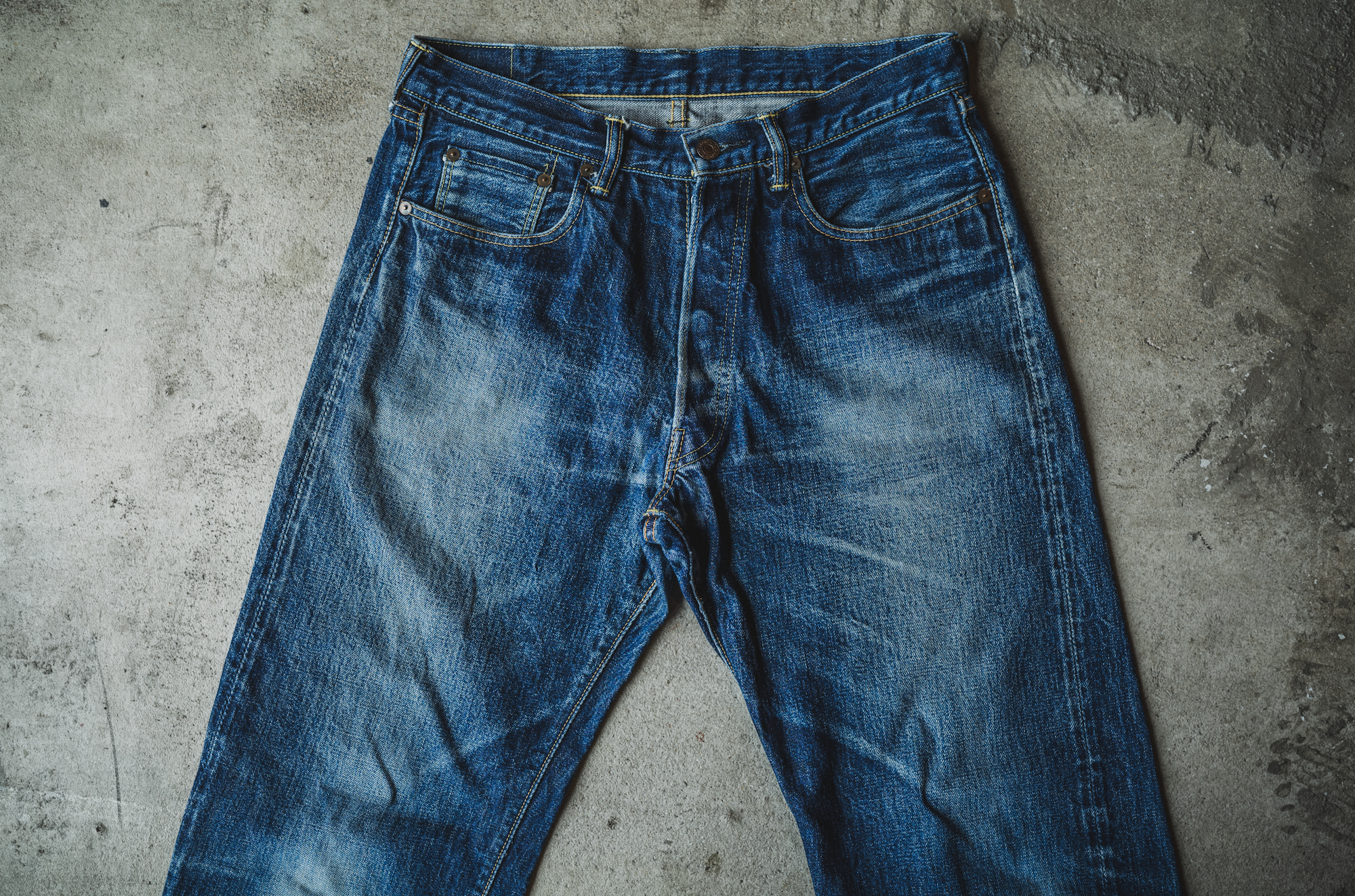
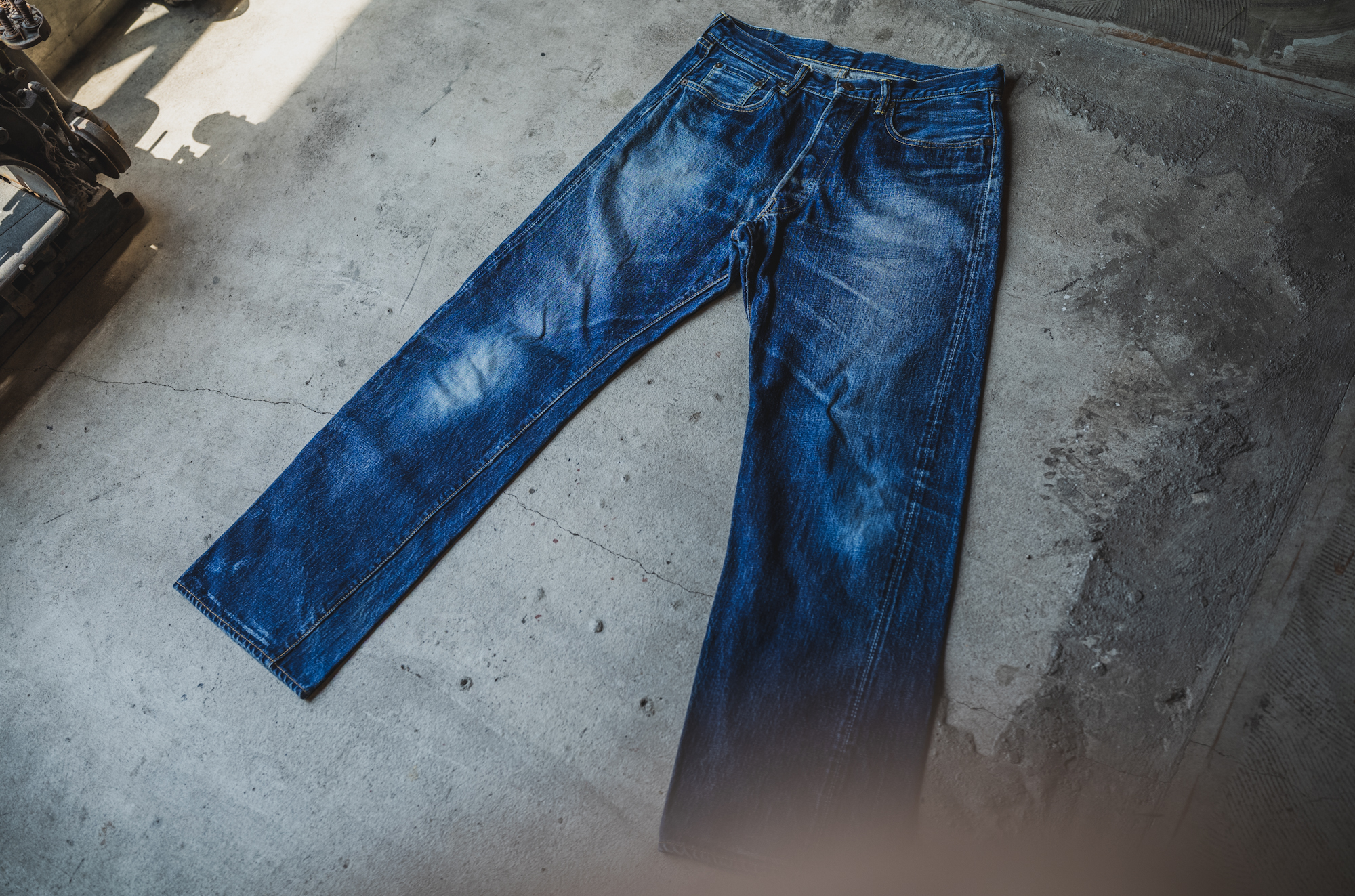
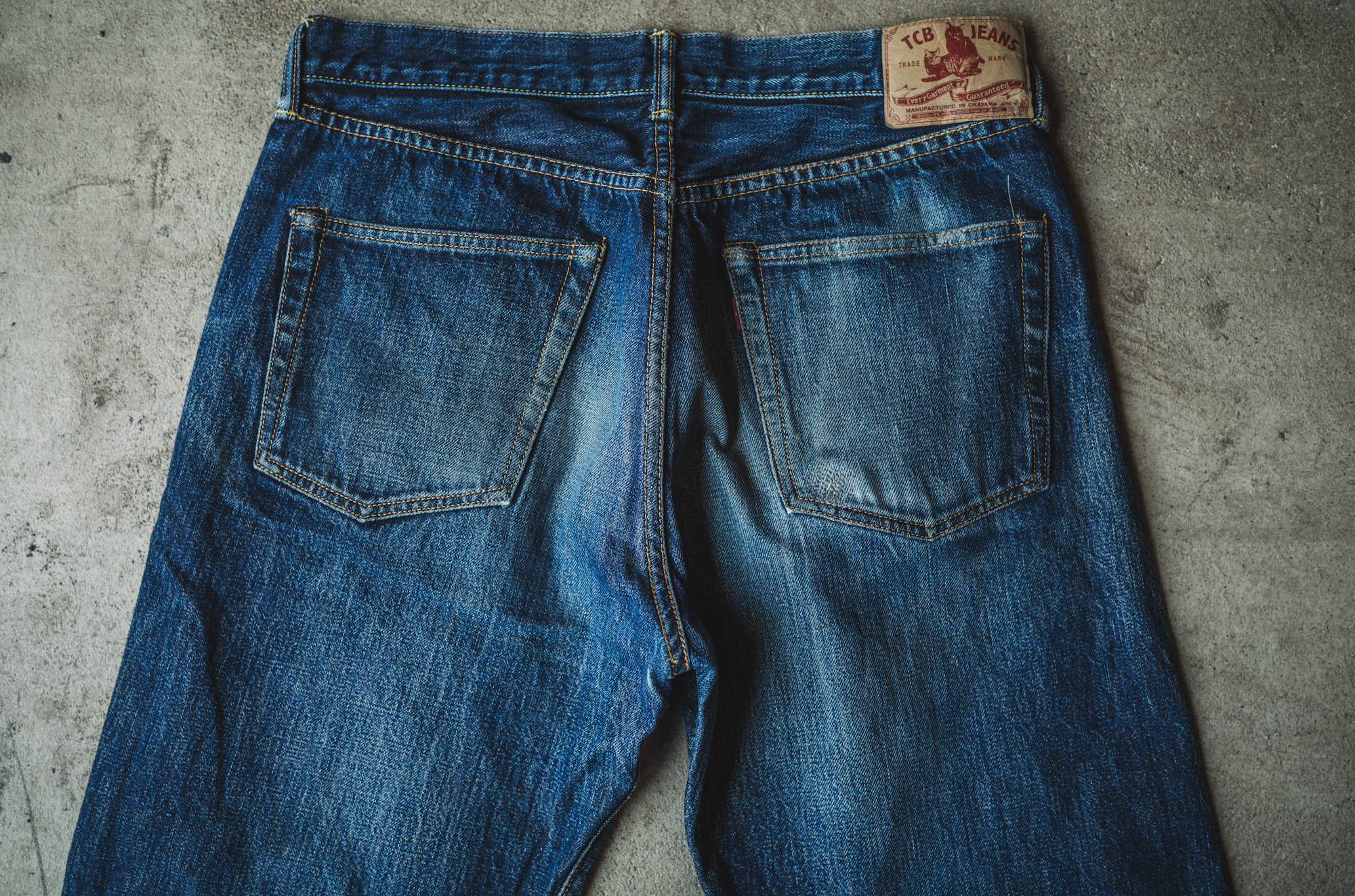
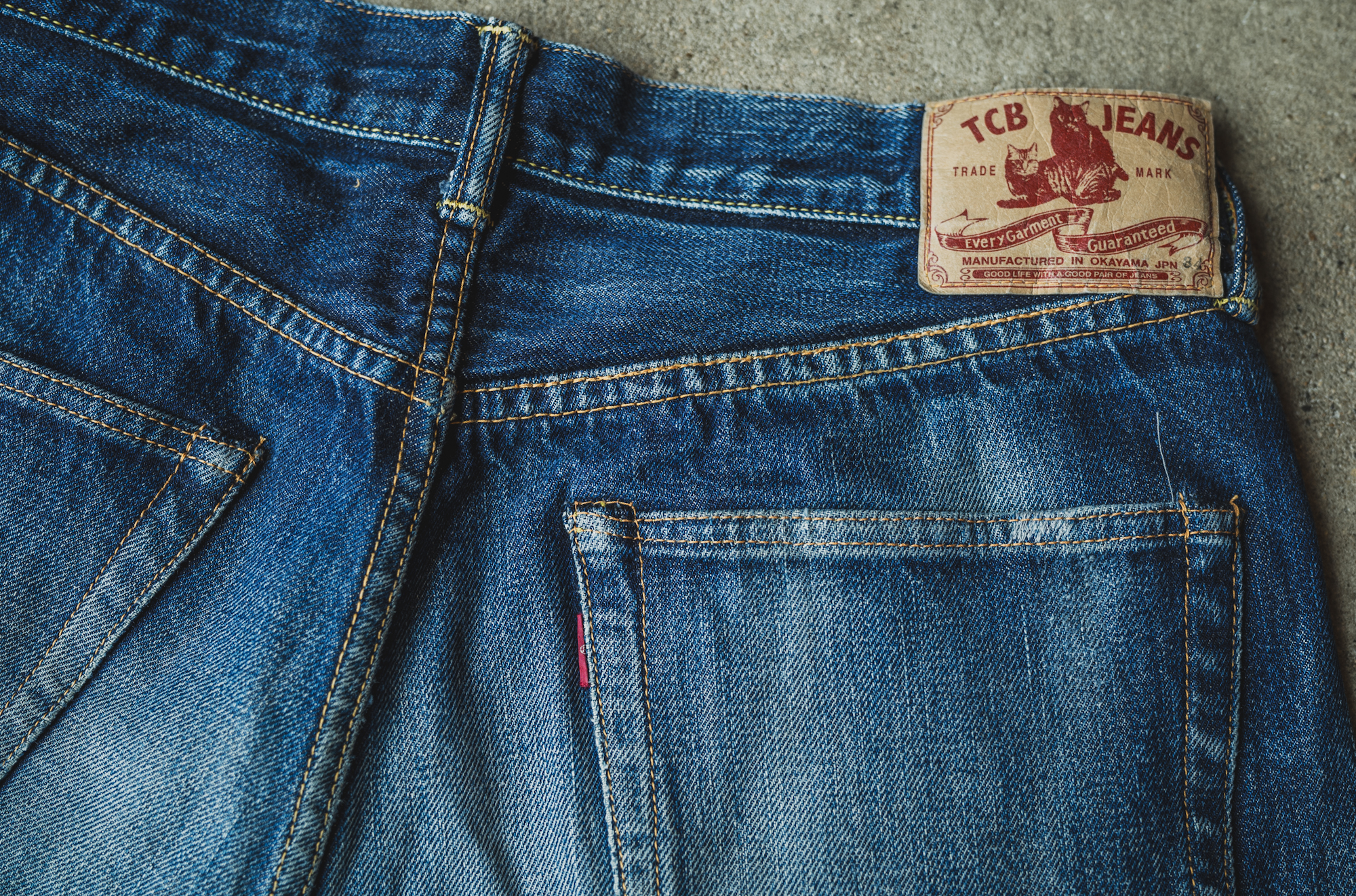
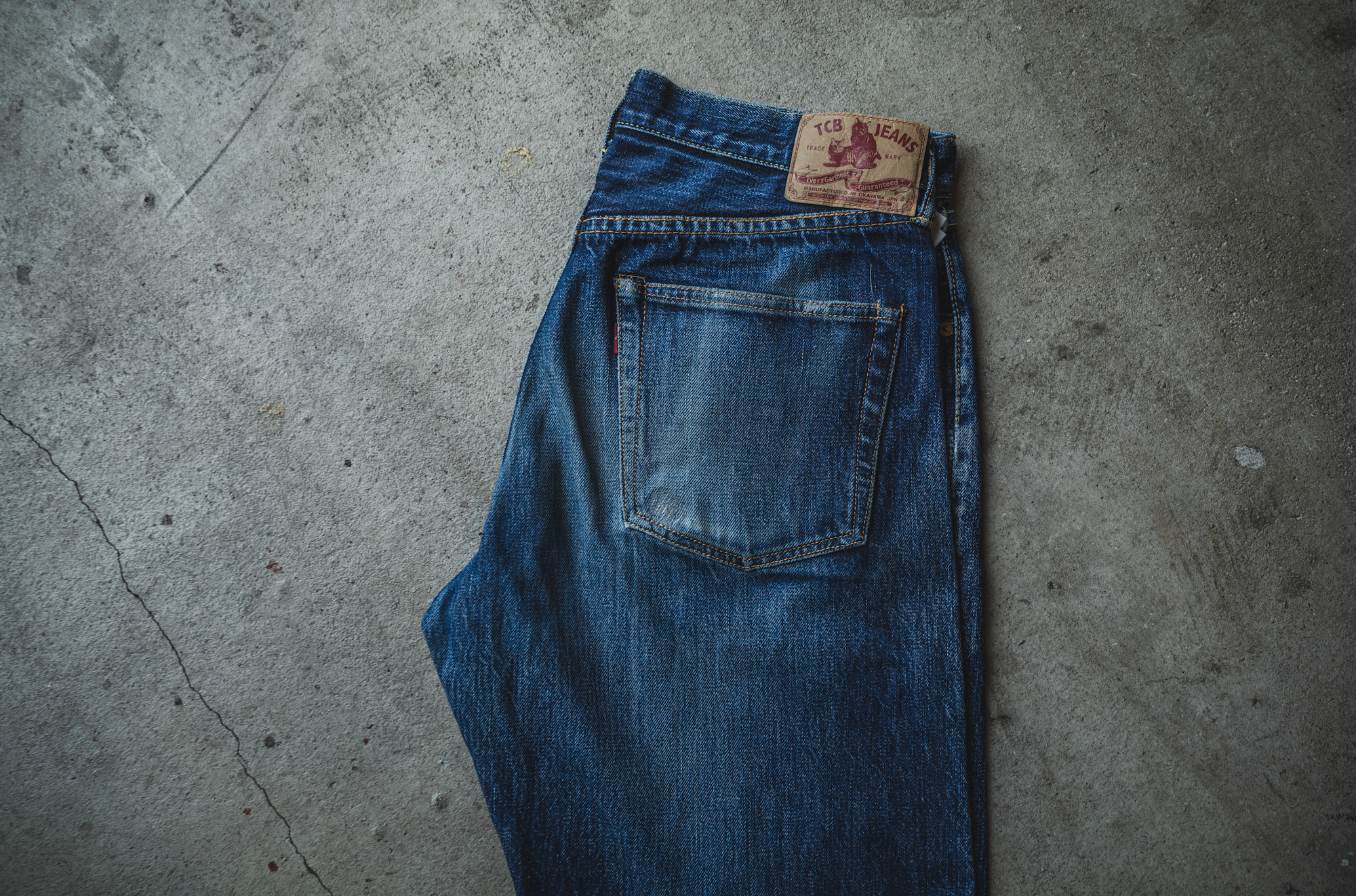
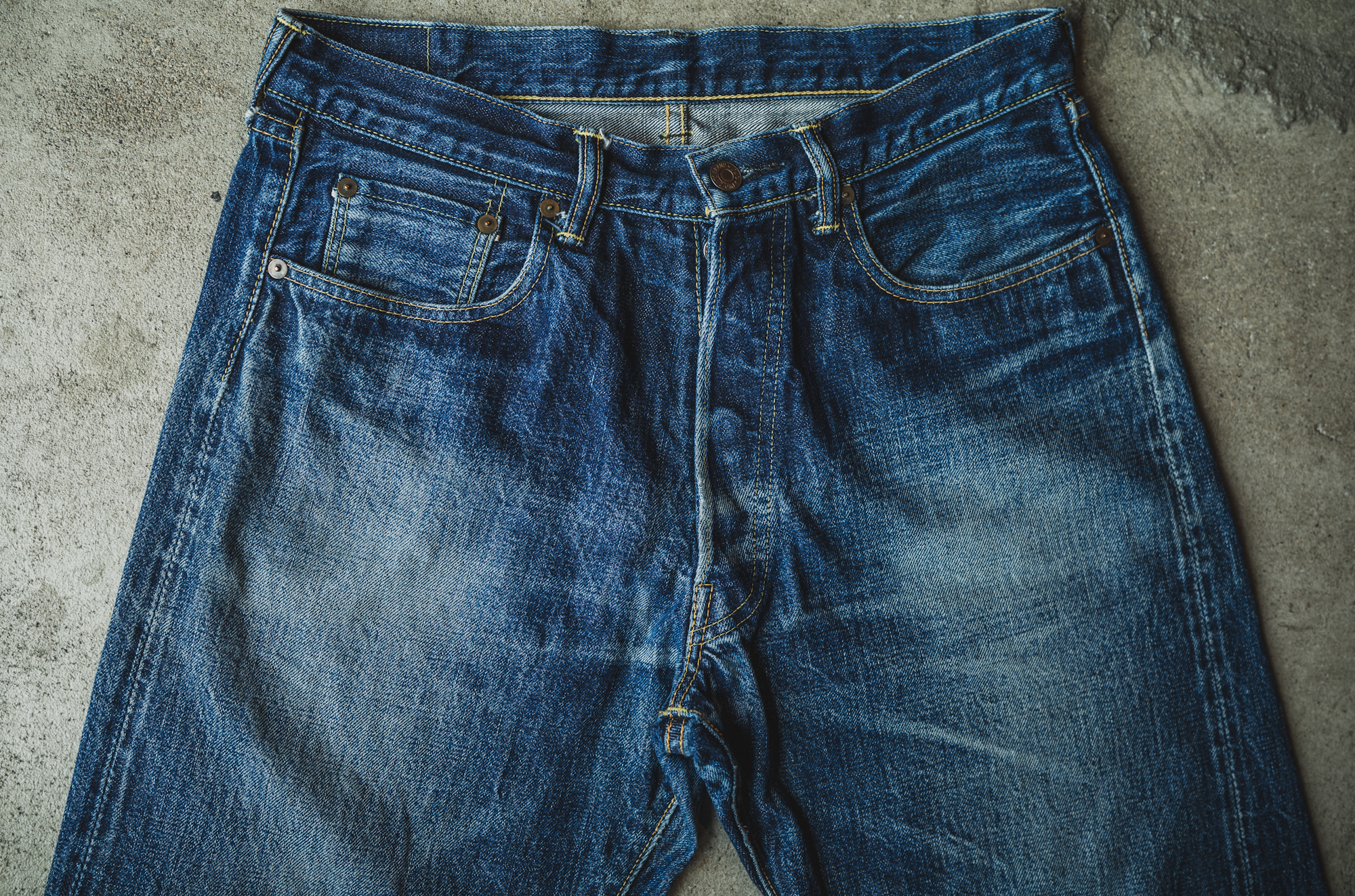
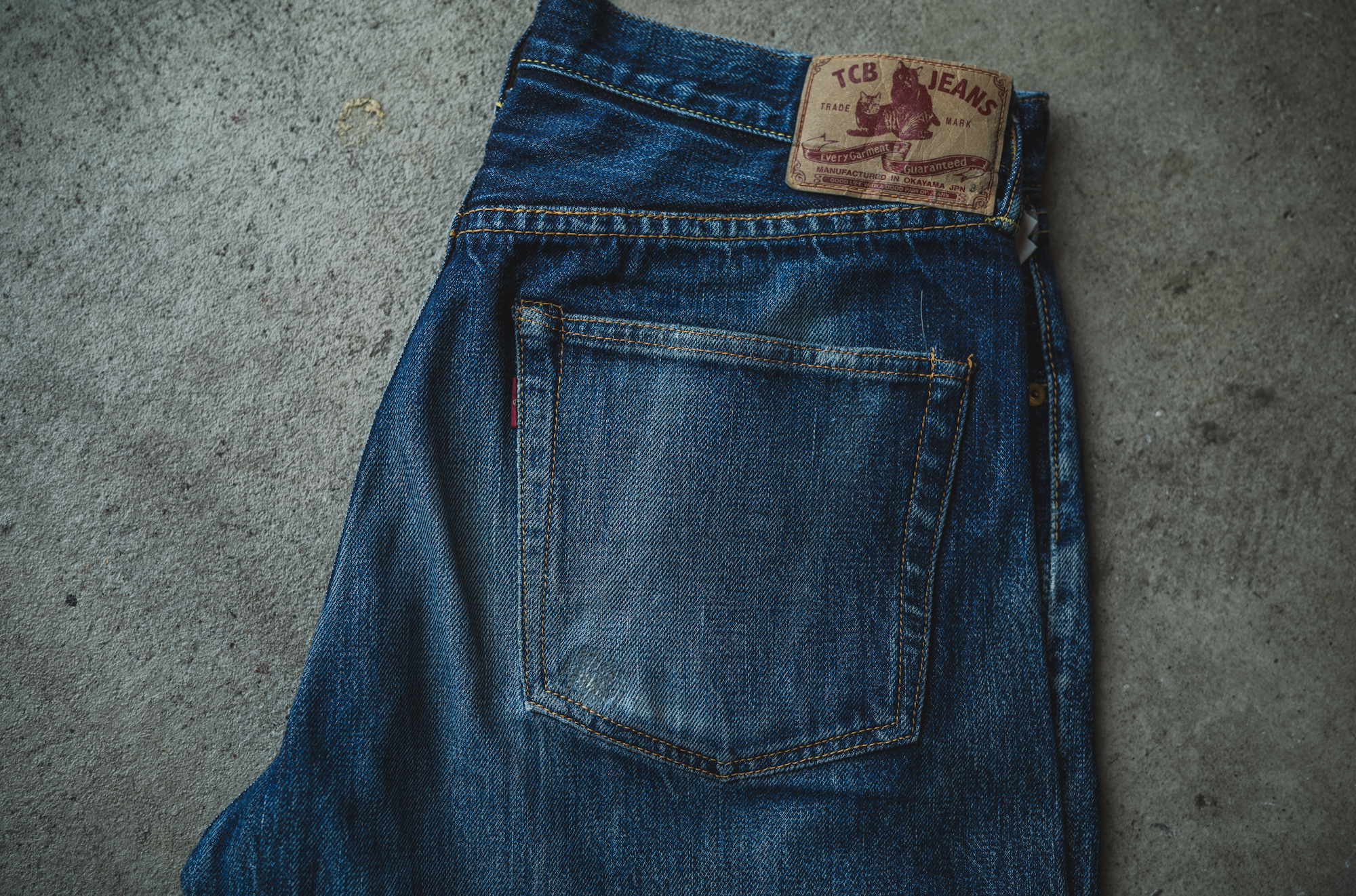
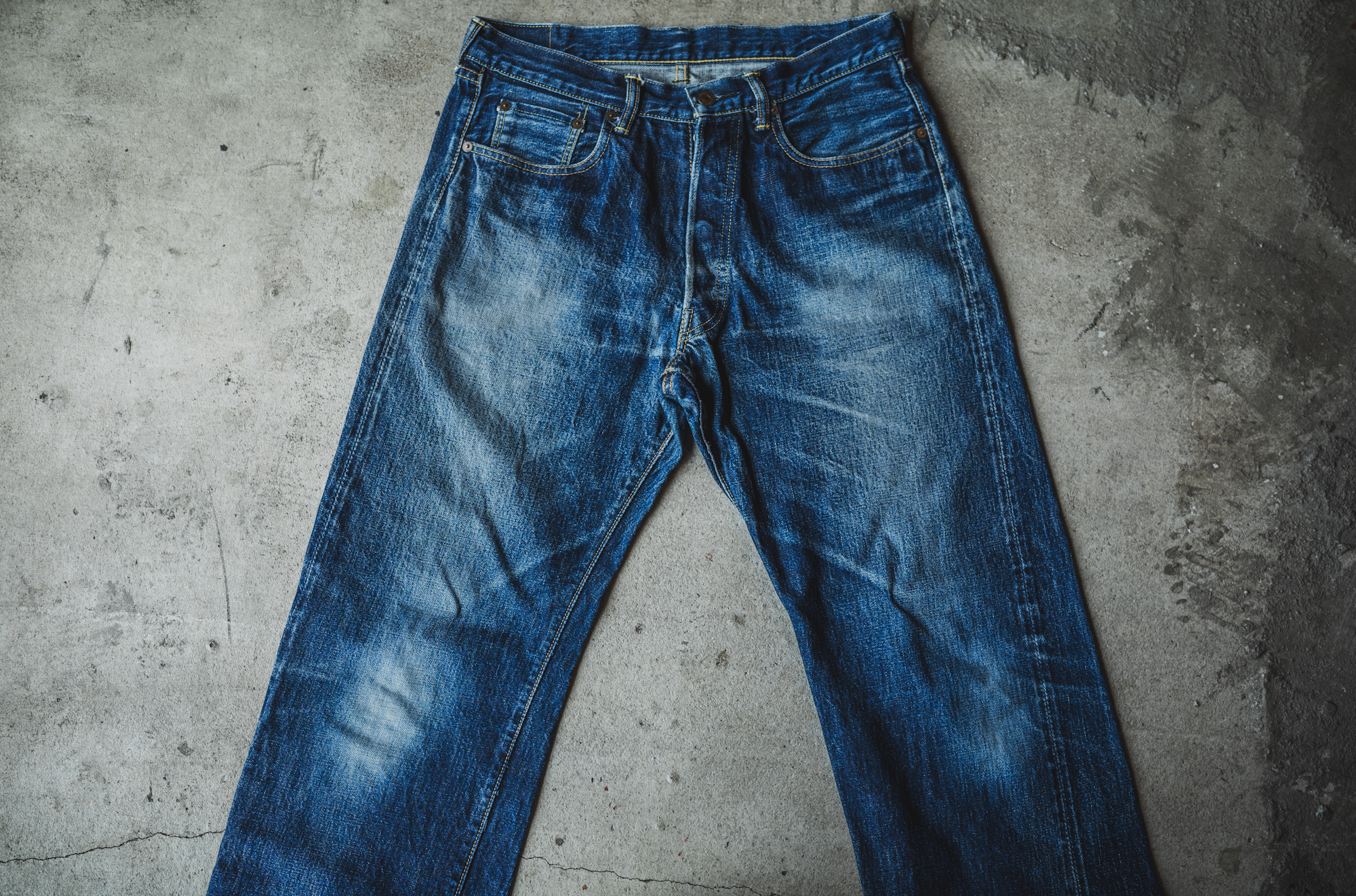
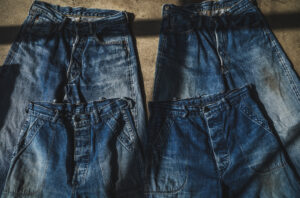
今日紹介する一本も、そんな「適度に洗われて育ったジーンズ」。ヒゲ至上主義の方からすると「ちょっとボヤけてるよ!」と言いたくなるかもしれませんが、この柔らかい雰囲気こそ、50~60’sのジーンズらしい色落ちを思わせます。
戦後になると綿の質が良くなり、繊維長が長くなったことで、色落ちが点ではなく線で落ちるのが特徴。TCB 50’sの色落ちは、まさにその時代の空気を感じ取っていただけると思います。
私は相変わらず、鴨のヒナが最初に見たものを親と認識するように、90’sスタイルで洗うのを我慢してしまうのですが、時々こういう色落ちを目にすると心惹かれてしまうのです。
だからこそ、ぜひTCB 50’sで、その時代の空気感を体感してみてください。
Back in the 90’s, I was conditioned to believe that “you should never wash your jeans.”
Even now, I secretly resist washing them.
Of course, the intense whiskers and sharp contrasts that come from not washing are impressive, but rather than making people say,
“Oh, Vintage!”
they usually say,
“Wow, a pair of jeans stylishly raised by a Japanese wearer!”
Personally, I feel that jeans worn with occasional washing tend to age in a way that resembles true Vintage pieces. This is especially true of jeans from the era when laundromats became common in the U.S. and leather patches were replaced with paper ones.
The pair I’m introducing today is one of those “washed just enough” jeans. To the whisker supremacists, they may look a bit blurry, but that soft look is exactly what gives them the feel of 50’s–60’s jeans.
After the war, cotton quality improved and fiber length became longer, which made fades shift from “dots” to “lines.” The fades of the TCB 50’s are a faithful reflection of that era’s atmosphere.
Like a duckling that imprints on the first thing it sees as its parent, I still cling to my 90’s habit of avoiding washes.
But whenever I see this kind of fade, I can’t help but be drawn to it.
That’s why I invite you to experience the atmosphere of that era for yourself, through the TCB 50’s.





 Categolies
 Tag
Tag Archive